Black Bear Information

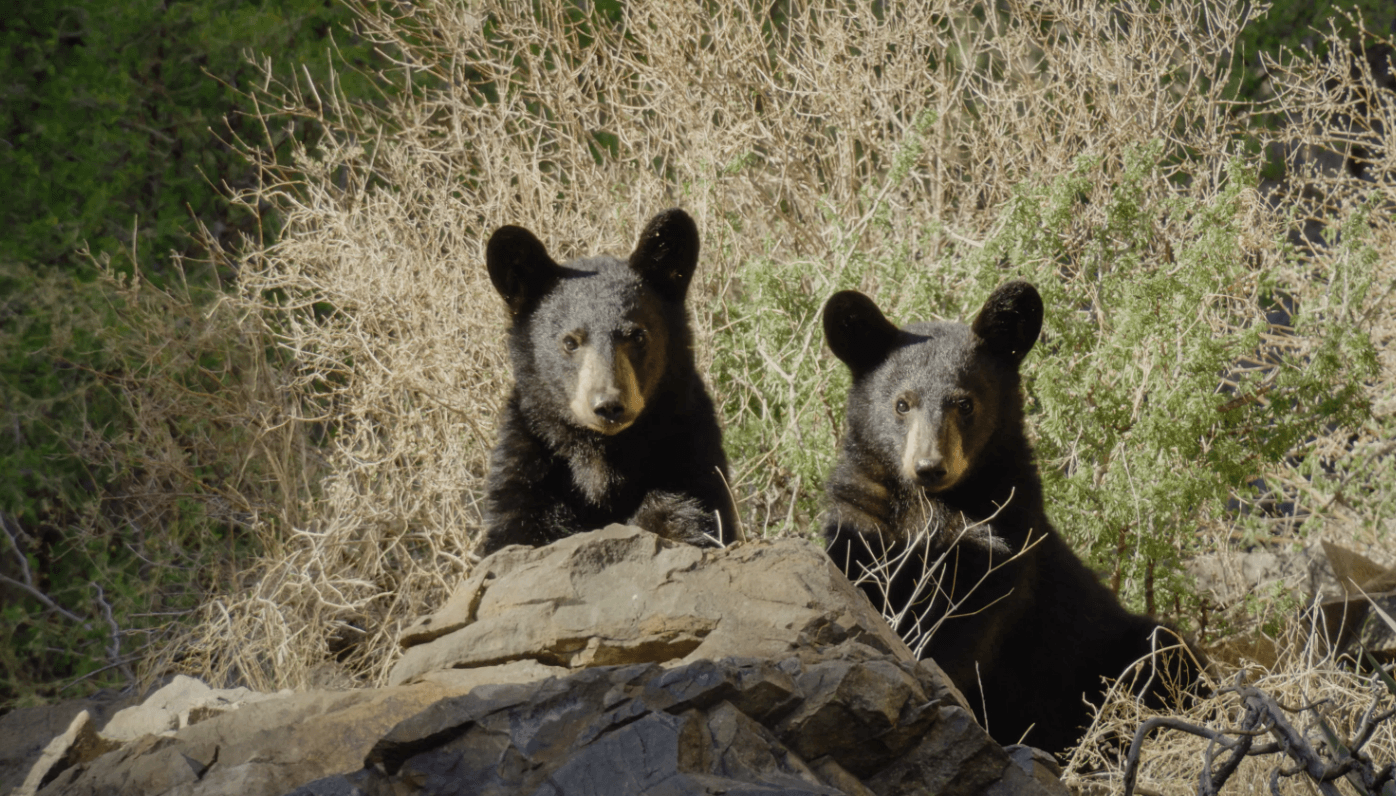
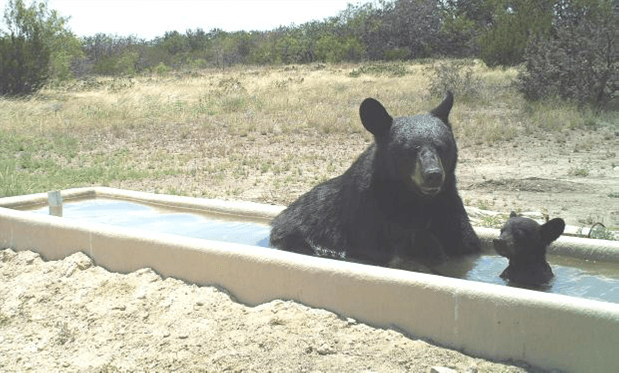
Black Bears are steadily moving back into the Big Bend area of the Trans Pecos, the Hill Country, the Panhandle, and deep Northeast Texas. In fact, Black bears have been spotted all across the Texas Hill Country, and sightings are becoming more common. In 2022, there were 154 confirmed sightings, up from 25 in 2000. On December 23 of 2024, we recorded images on our wildlife trail camera of Black Bears and have also identified their scat on the property. Although appealing and generally harmless, Black Bears can injure humans when provoked and should be treated with caution. Black Bears tend to act more like goofy raccoons, and they are only after your food. They are on the endangered species list and you are prohibited from injuring or killing these animals. It is also illegal to hunt Black Bears.
Despite its name, the Black Bear's coat can be jet black to cinnamon brown, depending on genetic selection in the local population. Adults reach a length of 5 to 6 feet, height at the shoulder of 2 to 3 feet, and weigh 200-300 pounds. Front claws are generally longer than hind claws. The fur is long and coarse.
At home in the woods and forests, Black Bears are capable of climbing trees, but adult bears generally prefer remaining on the ground. Although classified as a carnivore, the Black Bear is a true omnivore, opportunistically feeding on a wide range of food items. Analysis of scat (bear droppings) shows that vegetable material almost always comprises over half the bear's diet, with insects and other animals comprising a small percentage. In particular, fresh leaves, fruits, berries, nuts, roots, and tubers are favorite foods seasonally, with insects and small mammals eaten when the opportunity arises.
It's easy to see where bears have been. They frequently break the branches of nut-bearing trees while feeding and tear up the ground looking for insects, roots, prickly pear fruit, or tubers. Black Bears in Texas especially relish the succulent base of the sotol plant (Dasylirion). In desert environments, it's common to find partially eaten sotol plants where bears have been. Bears will also strip the bark from trees while looking for insects or juicy pulp and will often rub themselves on rough bark.
The Bear Necessities:
1. Never hand-feed or approach bears. Keep a safe distance.
2. Secure the garbage can lids with the straps.
3. Remove any food off the porches, picnic area, or around the firepit.
4. Do not leave food in your vehicles.
5. Do not leave coolers outside.
6. Do not leave dog food outside.
7. Clean off the grills and remove the waste. Close grill lids.
8. Bears can climb, so the gates/fences will not keep them out of the courtyard.